On August 2, the launching ceremony of the 100-day countdown to the 15th National Games and the 12th National Paralympic Games and the 9th Special Olympic Games (hereinafter referred to as "the 15th National Games and the Special Olympic Games") was held in Shenzhen Radio and Television Group was held. Cheng Kai, director of the Organizing Committee of the Paralympic Special Olympics and chairman of the China Disabled Persons' Federation, and Gao Zhidan, director of the Organizing Committee of the 15th National Games and director of the State Sports General Administration of Sports, attended and delivered speeches. At the launching ceremony, the Organizing Committee of the 15th National Games and the Paralympic Special Olympics released the "blooming" of the torch of the National Games, the "concentric warmth" of the medals of the Paralympic Special Olympics, as well as the ceremonial costumes and award music of the events, and displayed the emblem and mascot of the National Games, as well as the medals and costumes of the 15th National Games.
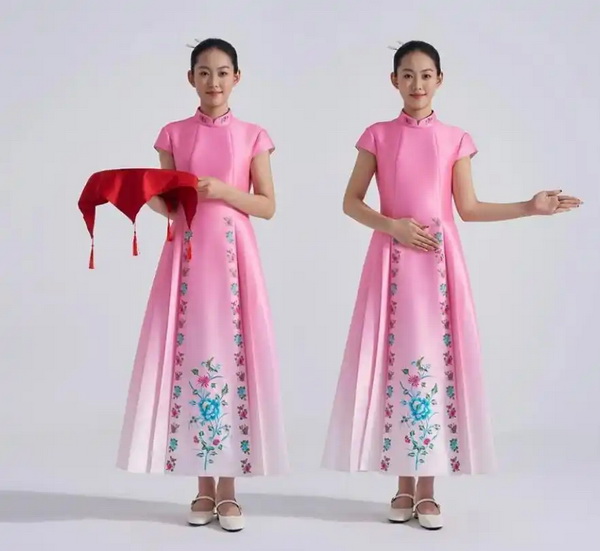
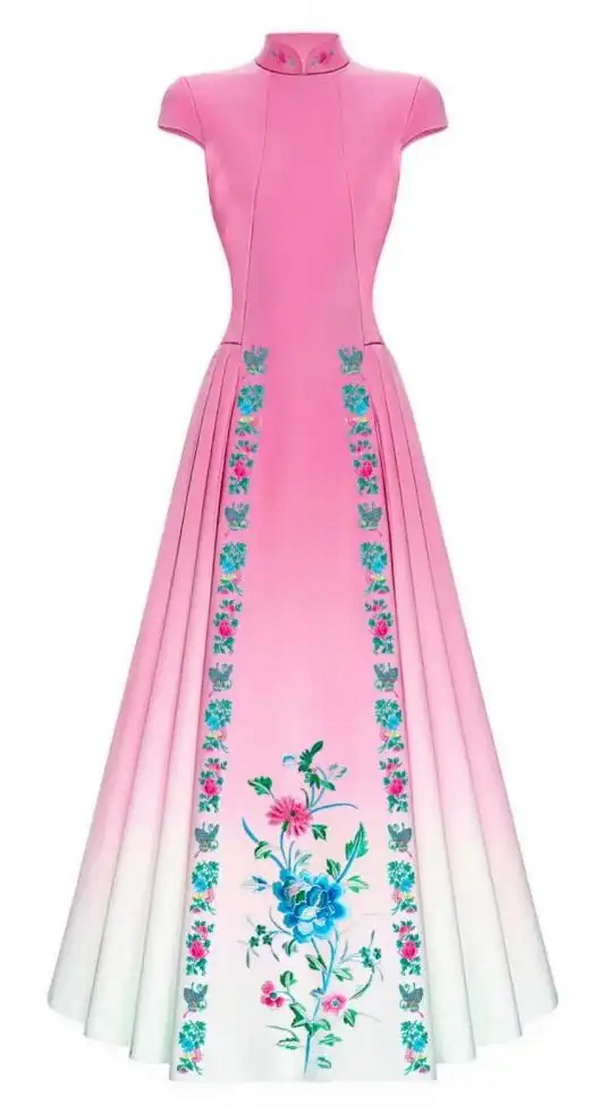
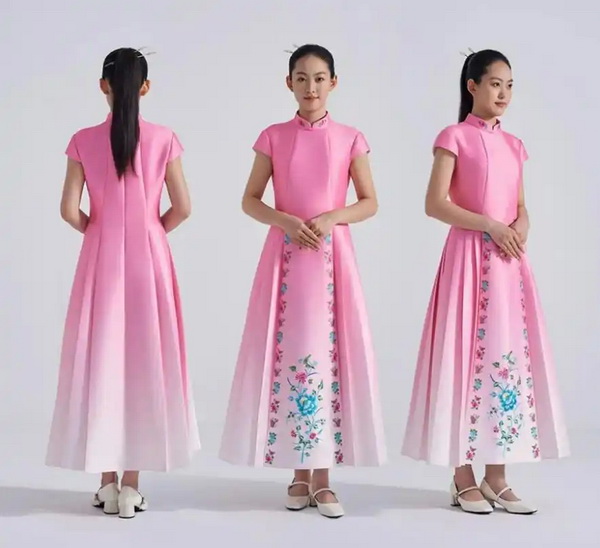
In the style, the dress maintains the classic ankle length, through simple and elegant lines to show the feminine soft and dignified. Among them, the one-piece design is simple and atmospheric. The design of high collar increases the structural sense and three-dimensional sense of clothing, highlighting the temperament of oriental women. The profile retains the skirt door of the traditional horse-faced skirt, and the I-shaped pleats rise and fall, giving birth to Lotus step by step, showing the beauty of Chinese etiquette. In terms of color, the overall color of the ceremonial dress is mainly pink, symbolizing hope, youth and vitality. The application of a single color depth gradient makes the overall clothing more fashionable.
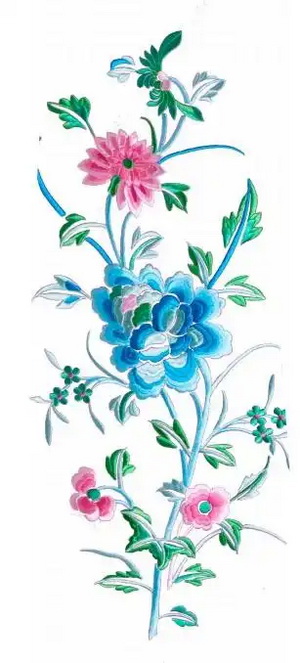
It is particularly worth mentioning that the peony flower pattern on the etiquette dress of the National Games is a highlight. The design of the skirt door pattern is inspired by the "outstanding" of Cantonese embroidery, which not only emphasizes the beauty and uniqueness of peony, but also metaphors The outstanding performance of athletes in the National Games. The peony flower pattern extending from the skirt is full of upward vitality, making the overall visual effect balanced and layered. The embroidery pattern adopts the three-blue embroidery craft, the color is soft, elegant and the depth is natural, which not only conveys the profound national cultural connotation, but also symbolizes the characteristics of harmony, prosperity, openness and tolerance, and ecological civilization of the three places in the Greater Bay Area.